
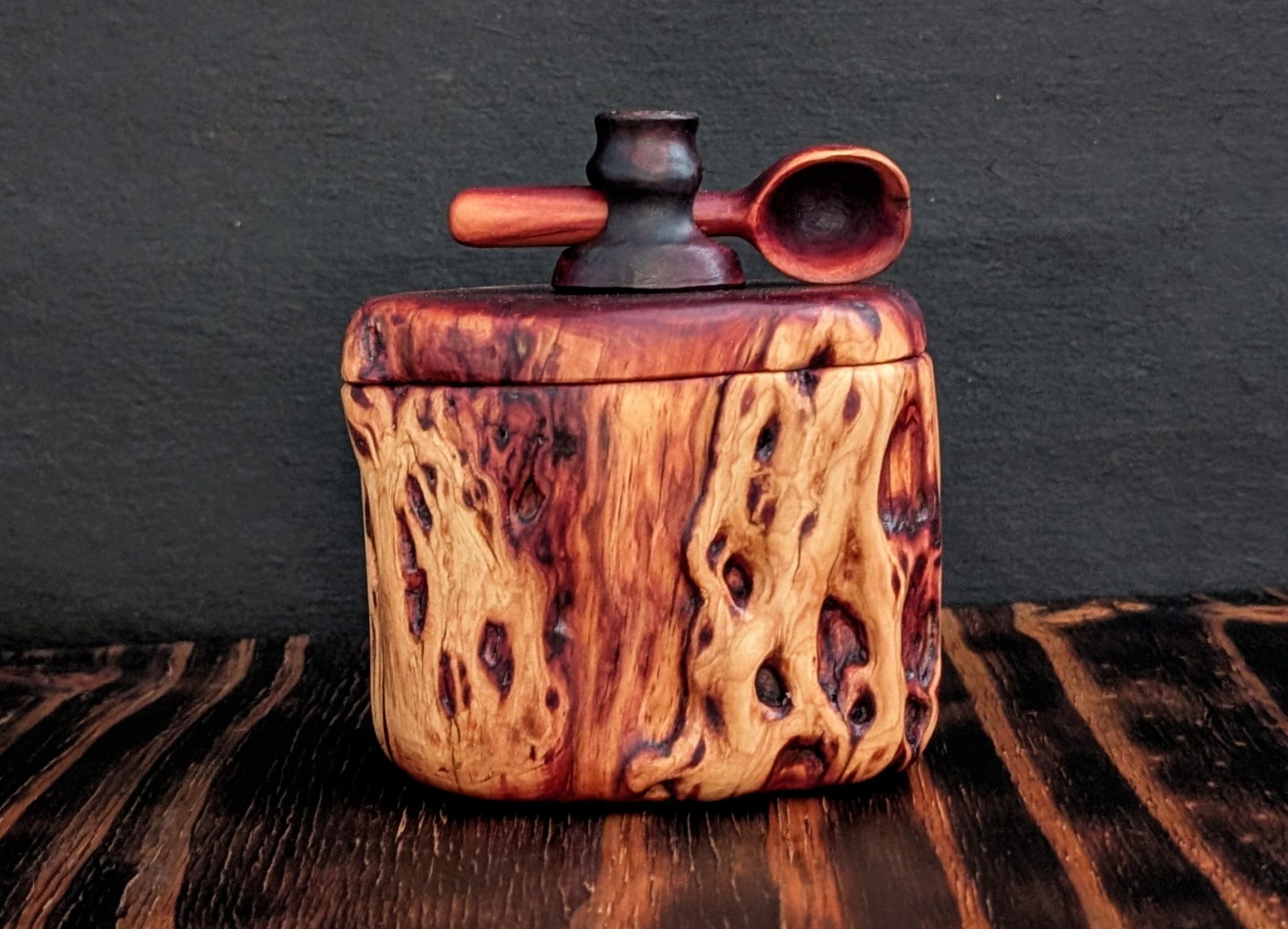
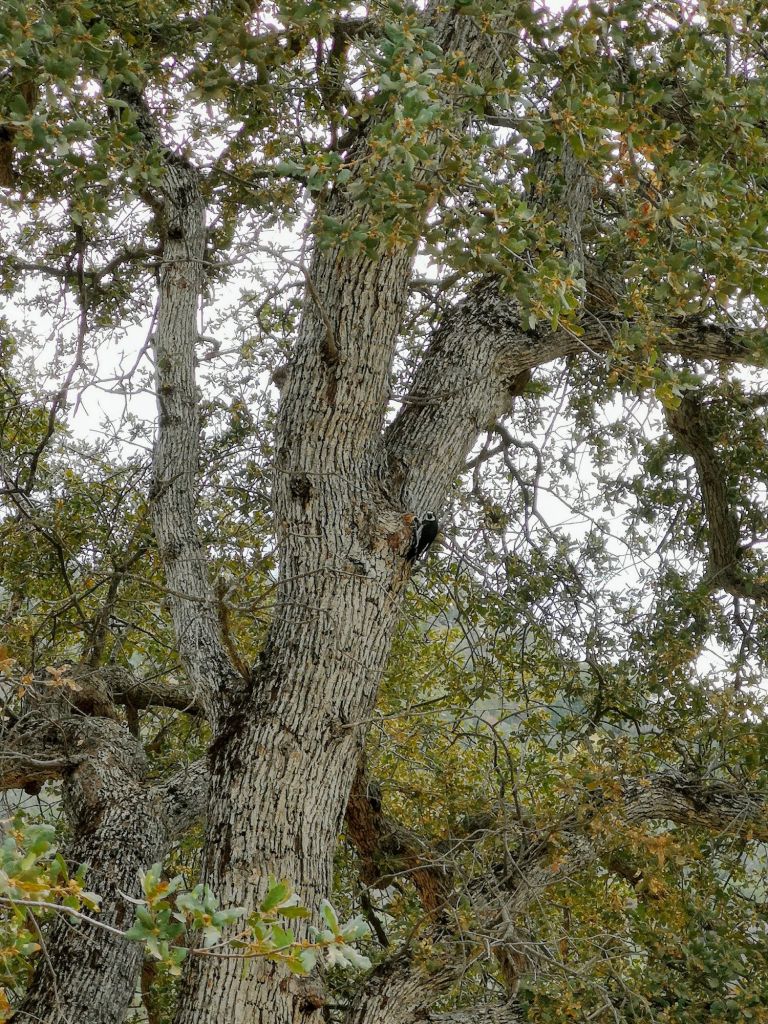
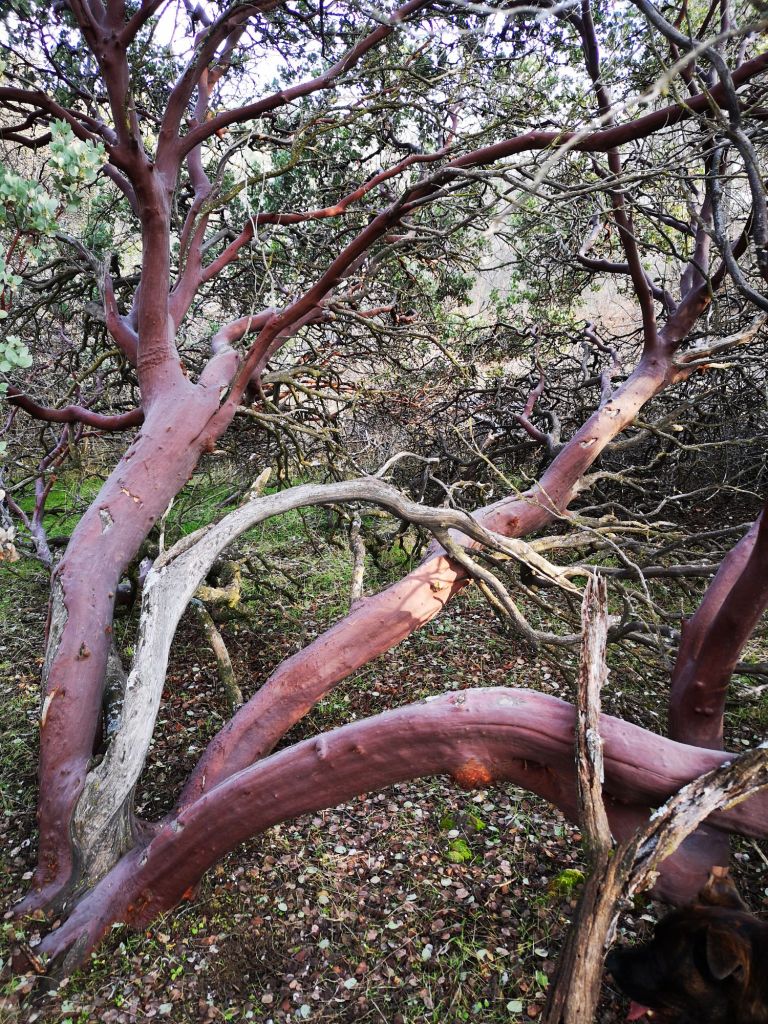
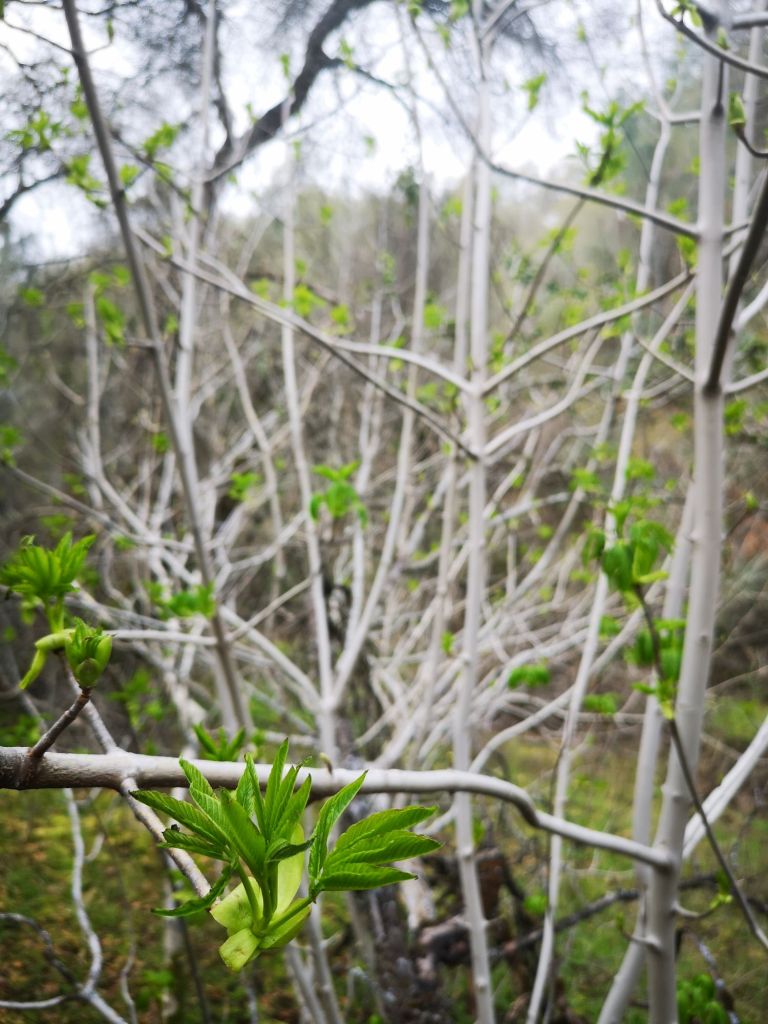
Three of the most interesting trees in the Sierra foothills are Oak, Manzanita and Buckeye.
Oak is like a blue-collar dad, working in the factory every day to send his kids to college, sturdy and reliable. But when the tree dies, interesting things begin to happen. Microorganisms work their way into the wood, changing the color and texture. Normally light brown, the wood gets whorls of yellow and streaks of black. Yellow means decomposition, the wood becomes softer, eventually useless. Opening a decaying branch is exciting, like uncovering treasure. An unseen world revealed.
Manzanita is born in fire, its seeds requiring flame to burn through the tough outer hull, allowing them to geminate. Its wood is flame-like, swirling yellow and red, and as it ages, it darkens. Ancient pieces are almost black, like charcoal. It is a weird and extravagant wood, full of twists and hollows, delicately-colored patterns only millimeters thick. Cut too deeply and they disappear. It’s a regal wood, refusing to conform, humbling the woodworker and demanding reverence.
Buckeye is a beautiful tree with broad green leaves and thin silver bark. In summer, long conical bunches of flowers emerge, filling the air with a honeyed perfume that stops you in your tracks. The trees seem to be eternal, neither dying nor dropping branches. As the tree ages, it curls and becomes warty. Inside, the wood becomes more beautiful. Like a watercolor painting, translucent and pale. Yellow and blue, grey and brown. One color bleeding into the next.

